Register for part 2 of our Device Identity Webinar Series!

High-assurance identity for enterprise infrastructure

Increasingly critical infrastructure includes AI agents, MCP clients, MCP servers, and model runtimes acting autonomously.


Book a demo
background gradient
laptop with ai sparkles

AI expands the identity perimeter

Identity no longer stops at users and services. AI systems introduce non-human actors — including MCP clients and servers — that access internal APIs, SaaS applications, and sensitive data without a person in the loop. Your AI stack is now an access layer.

Enforcing device identity is a mess
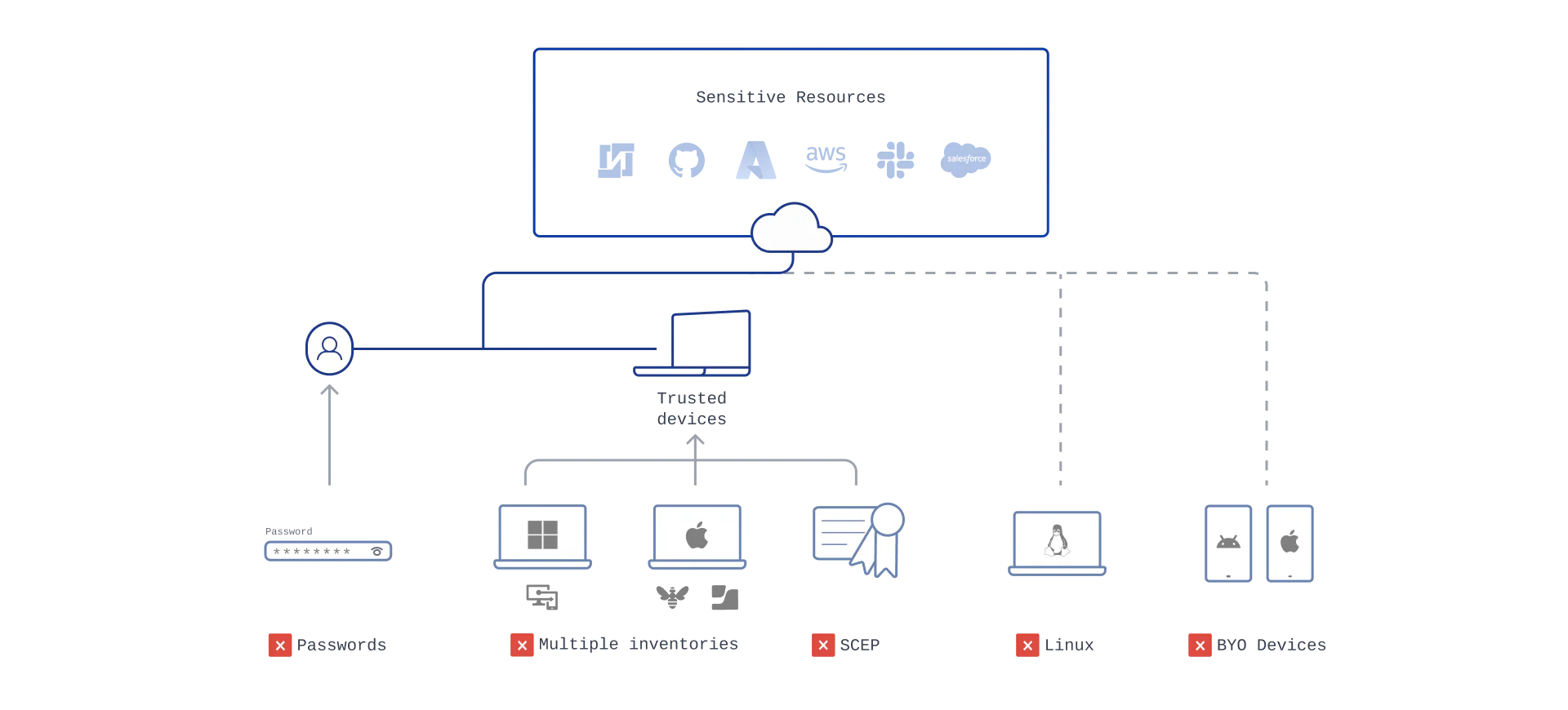
Enforcing device identity is a mess
Powered by ACME DA

ACME the new standard in security

Smallstep co-developed a real standard for high-assurance device identity with Google at the IETF. It's called ACME Device Attestation, ACME DA for short, and is a major upgrade to existing solutions like SCEP. ACME DA leverages hardware co-processors for attestation and keybinding⎯like a fingerprint for your device⎯ preventing credential exfiltration, phishing, and impersonation attacks.

Learn more

Solve device identity for every use case

wifi icon

Device identity for Wi-Fi

Simple, secure certificate-based Wi-Fi using EAP-TLS

Icon of an application window with a shield on top

Device Identity for SaaS Apps

Protect resources by enforcing device identity in SSO flows

Global security icon

Device Identity for VPN & ZTNA

Enforce device identity when connecting to VPNs and proxies

Cloud icon

Device Identity for DevOps

Cert management for workloads & VMs

Fingerprint id

Device Identity for SSH

Extend single sign-on & device identity to SSH
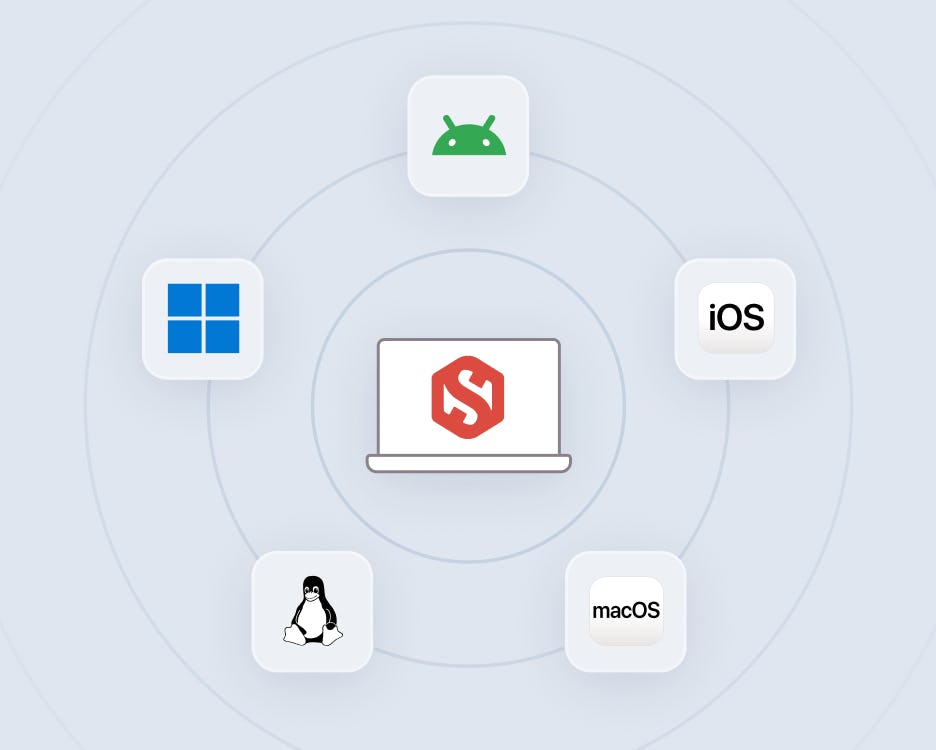
Graphic of OS logos

A cross-platform architecture that simplifies everything

There’s no need to string together point solutions when one platform can do it all. Say goodbye to maintaining multiple tools just to cover more than one operating system.
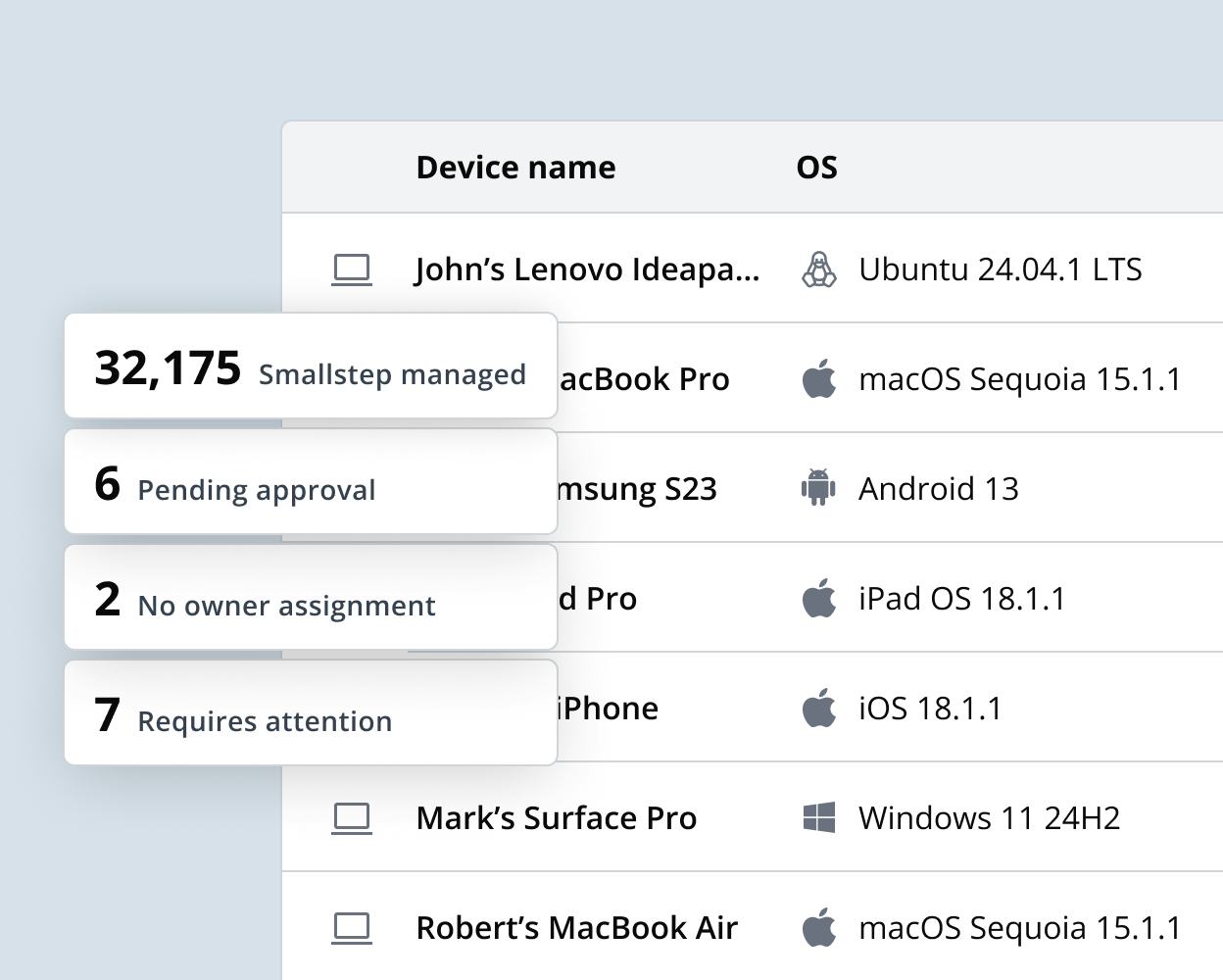
Device Inventory list UI

The building blocks of device identity

Achieving high-assurance device identity insists that four foundational components are in place. Smallstep simplifies the implementation of high-assurance device access by bridging the gap between security standards and operational reality. This leaves businesses with a modern and secure ecosystem to build on.
Learn more
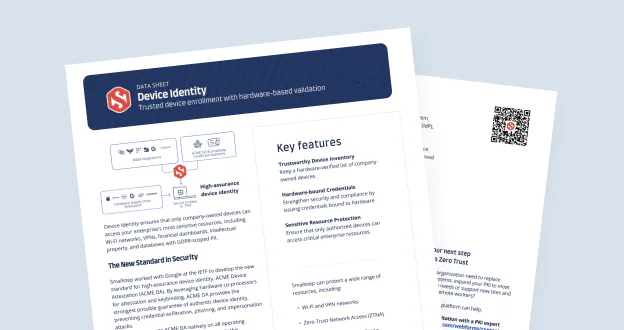
Device Identity Data Sheet

Get the data sheet

Device Identity ensures that only company-owned devices can access your enterprise's most sensitive resources, including Wi-Fi networks, VPNs, financial dashboards, intellectual property, and databases with GDPR-scoped PII.

Download
background gradient
Linux device ecosystem - WiFi, Firefox, cloud services, certificate management integration

Most MDMs don’t support Linux, but we do

Mobile Device Management tools (MDMs), like Intune for Windows or Jamf for Mac, are the orchestration layer that supports IT teams in managing large fleets of devices. Historically MDMs do not support Linux, often leaving Enterprise IT teams at a crossroads: should they allow engineers to use Linux even though doing so goes against basic security policies? Or rule out Linux entirely? Many companies find themselves in a game of limbo where no one wins.

Leading the industry in Zero Trust for devices

Empower your teams to work at the pace and scale of modern engineering.

Book a demo

FAQs about device identity

High-assurance device identity is the ability to cryptographically verify that an access request comes from a specific, trusted piece of hardware rather than from a copied credential or spoofed endpoint. Instead of relying on passwords, shared secrets, or self-reported identifiers, high-assurance identity uses hardware-backed keys and attestation to prove that a device is genuine, enrolled, and approved before granting access to sensitive resources.

Enforcing device identity is difficult because enterprises operate across multiple platforms, clouds, identity providers, and management tools, each with different enrollment mechanisms and trust models. Many legacy systems rely on portable credentials or passwords, which can be copied or reused, and most environments lack a unified control plane that can consistently issue, rotate, and revoke certificates across Wi-Fi, VPN, SaaS, SSH, and cloud APIs.

Smallstep centralizes certificate issuance, hardware attestation, and policy enforcement into a unified platform that works across macOS, Windows, Linux, ChromeOS, and mobile devices. It uses cryptographically attested hardware identifiers and short-lived certificates to ensure that only approved devices can enroll for credentials and access enterprise resources, reducing reliance on static secrets and manual PKI management.

ACME is a standardized certificate enrollment protocol that automates certificate issuance and renewal without manual intervention. Smallstep extends ACME with device attestation so that devices must prove their hardware identity before receiving credentials, allowing organizations to replace insecure legacy enrollment methods like static SCEP with automated, cryptographically verified certificate workflows.

Zero trust for devices means that access is never granted based solely on network location or assumed trust. Smallstep enforces this model by requiring hardware-backed certificates for authentication, validating device identity at every access request, and integrating with identity providers and policy engines so that both user and device identity must meet defined security requirements before access is granted.

Yes, Smallstep integrates with major MDM platforms such as Jamf, Intune, and Workspace ONE, as well as identity providers like Okta, Entra ID, and Google Workspace. These integrations allow organizations to sync device inventories, automate enrollment, and enforce device trust policies without replacing their existing ecosystem, while strengthening it with hardware-backed certificate authentication.

Smallstep enables certificate-based authentication for Wi-Fi using 802.1X and EAP-TLS and for VPN using mutual TLS, ensuring that only devices with valid, hardware-bound certificates can connect. Because certificates are short-lived and non-exportable, this approach eliminates credential theft risks associated with passwords or shared secrets and simplifies revocation when devices fall out of compliance.

When a device is removed from inventory or fails posture checks, Smallstep can revoke its certificates and prevent it from enrolling for new ones. Since access depends on valid, hardware-bound credentials, the device immediately loses the ability to authenticate to protected resources, helping organizations maintain continuous enforcement without manual cleanup of distributed keys.

Smallstep automates certificate issuance, renewal, revocation, and monitoring through a centralized control plane and API. It supports distributed local certificate authorities with shared configuration and policy enforcement, allowing enterprises to scale securely across regions and environments while maintaining consistent reporting, observability, and compliance controls.

Traditional enterprise PKI solutions often rely on legacy enrollment protocols, long-lived certificates, and complex manual configuration that make enforcement inconsistent and operationally heavy. Smallstep builds on modern standards like ACME and hardware attestation to provide short-lived, automatically managed certificates that are bound to real devices, delivering stronger security guarantees and a simpler operational model for enterprise infrastructure.