Register for part 2 of our Device Identity Webinar Series!

Device Identity for Enterprise IT

Smallstep secures corporate devices, networking, and source code with hardware-backed device identity. The same policies enforce trusted access to SaaS, internal apps, AI tools, and MCP-enabled services.

Book a demo
background gradient

Trusted by

Cross-platform coverageCross-platform coverage
Seamless integration
Eliminate credential theft
Real-time device inventory
IdP integration
WPA3 Enterprise Wi-Fi
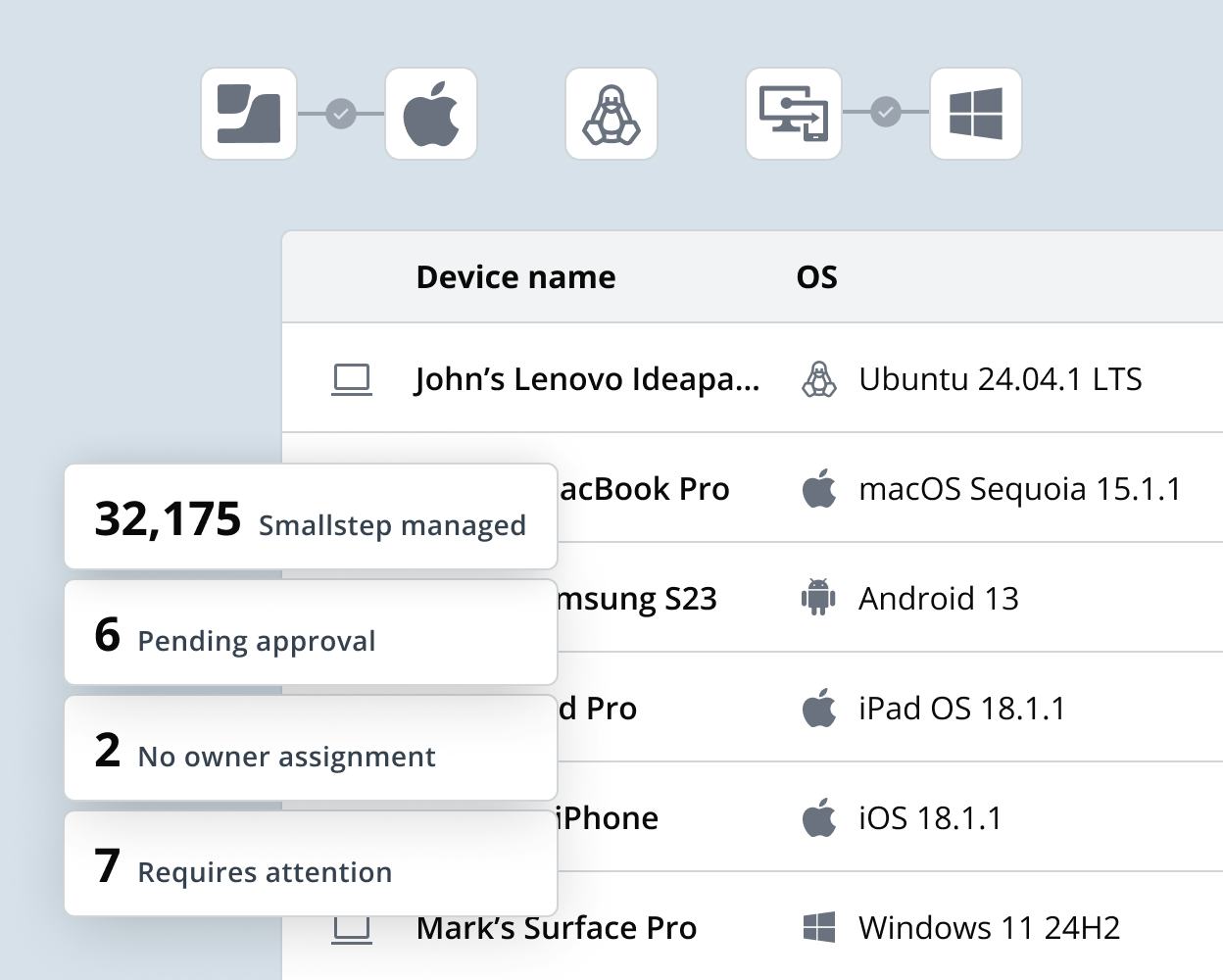
Device inventory list UI

Feel better about your device inventory

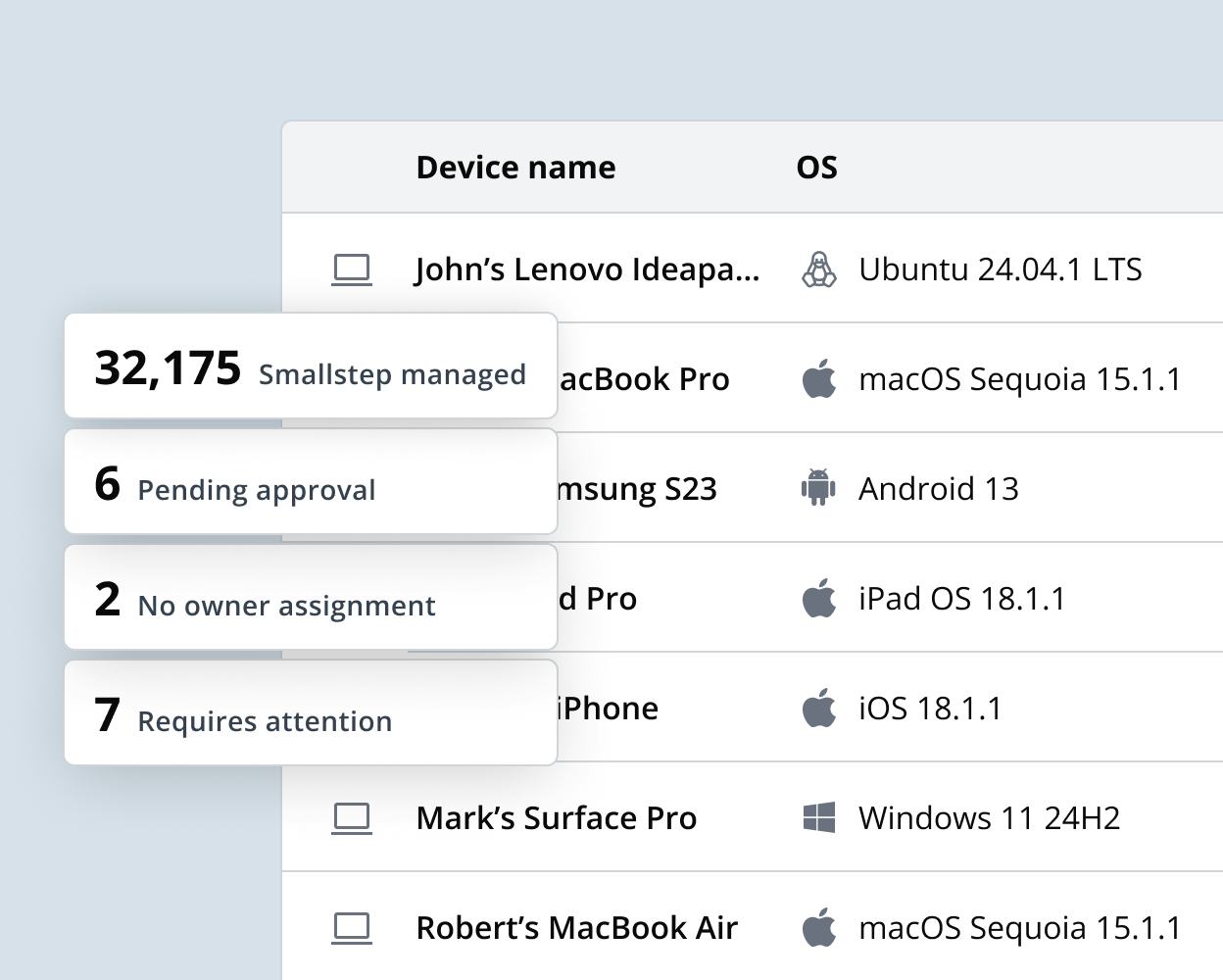
Do you really know where your devices are? Without a complete and verified list of all your trusted company devices, you can’t confidently implement device identity as an authentication factor. Smallstep's Device Inventory is a cybersecurity tool, not an ITAM replacement.

Learn more
Eliminate static secrets

Shine light on blind spots

Even the most robust user authentication (SSO, MFA, background checks) can’t detect which actual machine is being used. If employees—or attackers with stolen user credentials—can log in from unverified laptops, personal gaming rigs, or ephemeral virtual machines, your Zero Trust efforts lose much of their value. That’s where Device Identity comes in: it ensures only legitimate, recognized corporate devices can initiate connections to your most sensitive resources.
Learn more
Device Inventory list UI

Hardware-backed device credentials

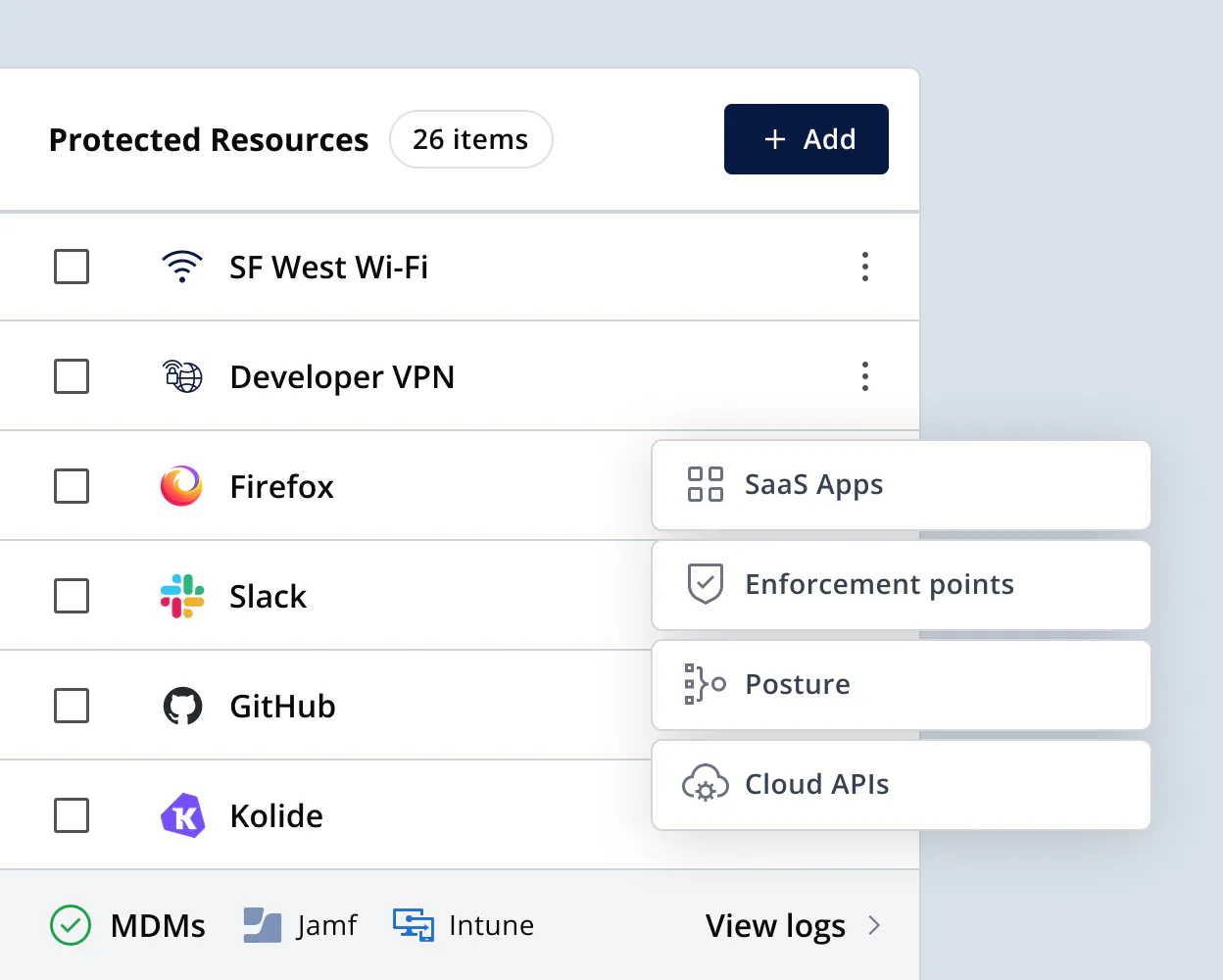
Device Identity ensures that only company-owned devices can access your enterprise's most sensitive resources, including Wi-Fi networks, VPNs, financial dashboards, intellectual property, and databases with GDPR-scoped PII. Smallstep device identity provides the strongest possible guarantee of authentic device identity, preventing credential exfiltration, phishing, and impersonation attacks.
Learn more
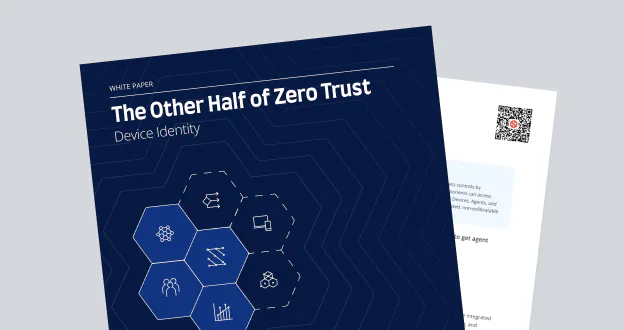
The Other Half of Zero Trust

Learn about the “Other Half” of identity

You could be missing half of Zero Trust. You have figured out user identity, but what about devices?

Download
background gradient
Resource Configuration

Learn more about the platform

The Smallstep platform helps mitigate numerous cybersecurity threats – from phishing to advanced hardware attacks – without impacting end-user workflows.

Learn more

Enforce device identity everywhere

Whether you’re working towards a compliance standard, closing gaps in policy enforcement, or preventing nation-state attacks, our team is here to show you how the Smallstep Platform can help.

Book a demo

FAQs Smallstep for Enterprise IT

Enterprise IT teams struggle with fragmented identity systems across operating systems, long-lived device certificates or shared passwords, and legacy Wi-Fi and VPN authentication methods like PEAP/MSCHAPv2, PSKs, and SCEP. Unmanaged SSH keys, persistent root access, weak device verification for SaaS and internal applications, and the absence of hardware-rooted trust leave device fleets difficult to secure and even harder to audit.

These gaps make Zero Trust adoption slow and inconsistent across cloud, on-prem, and hybrid environments. Smallstep addresses this by unifying device, user, and workload identity under a single, cryptographically enforced platform, enabling hardware-backed, continuously verified Zero Trust authentication for all enterprise resources.

Smallstep standardizes device identity across heterogeneous environments by anchoring trust in hardware rather than the operating system. Windows and Linux rely on TPM 2.0 attestation, macOS and iOS use Secure Enclave with managed device attestation, ChromeOS uses Verified Access, mobile platforms leverage hardware-backed keys where supported, and virtual machines are attested via vTPM across AWS, GCP, Azure, and VMware.

Every device is issued short-lived, continuously renewed, hardware-attested certificates. This guarantees a consistent identity model regardless of OS, device ownership, or network location, eliminating identity drift across the fleet.

MDMs focus on configuration and control, handling policy enforcement, compliance checks, and application deployment. Smallstep operates at the identity layer, delivering hardware-validated device identity, automated certificate lifecycle management, attestation and inventory gating, cryptographic authentication across mTLS, SSH, EAP-TLS, and VPN, plus device trust enforcement directly within SSO flows, all with unified auditability.

In short, MDMs ensure devices are configured correctly. Smallstep ensures devices are authentic, continuously verified, and cryptographically trusted.

Smallstep modernizes Wi-Fi security by replacing shared secrets and static profiles with hardware-bound EAP-TLS certificates. Wi-Fi onboarding is automated through MDM, authentication is enforced via hosted or on-prem RADIUS with built-in device trust, and support for WPA3-Enterprise and Suite-B 192-bit enables strong, standards-based cryptography. Unmanaged or unattested devices are blocked, and short-lived certificates ensure automatic revocation without manual intervention.

This approach eliminates password-based Wi-Fi, weak PEAP/MSCHAPv2 authentication, SCEP profile theft, MAC spoofing, and long-lived certificates that persist beyond device lifecycle events. Smallstep makes Zero Trust Wi-Fi operationally viable at enterprise scale.

Smallstep upgrades VPN authentication by replacing passwords and pre-shared keys with IKEv2 and mTLS backed by hardware-attested certificates. Only verified devices are allowed to initiate VPN tunnels, certificates rotate automatically, and there are no static VPN credentials to distribute, manage, or steal.

This model works across all major VPN platforms including Cisco, Fortinet, Palo Alto, AWS, Azure, GCP, and strongSwan, while enabling per-user and per-device policy enforcement. VPN access shifts from perimeter-based trust to identity-based control.

Smallstep SSH replaces static keys with short-lived SSH certificates issued through SSO, with optional device-bound enforcement and ephemeral user provisioning via NSS and PAM. Authorization is encoded directly into certificates using role-based policies, and every access event is fully auditable.

This removes SSH key sprawl, shared root credentials, vault-stored keys, manual rotation projects, and persistent server access. SSH becomes a Zero Trust workflow that is cryptographically enforced and continuously verified.

Smallstep integrates device identity directly into SSO authentication flows, requiring a hardware-backed mTLS certificate for every login. Okta, Entra, or Google validate device trust before issuing access tokens, preventing token replay, session hijacking, and access from unmanaged or spoofed devices.

This enforcement applies consistently across SaaS and cloud platforms including Google Workspace, Microsoft 365, GitHub and GitLab, Salesforce, AWS, GCP, Azure, and internal admin consoles. SSO shifts from user-only authentication to a combined user + device trust decision.

Smallstep ZTNA secures access using hardware-attested device identity combined with mTLS and MASQUE over HTTP/3, enabling per-application access without exposing the underlying network. This removes the need for legacy VPN concentrators while enforcing Zero Trust at the application layer rather than the network perimeter.

Access policies apply uniformly across browsers, CLI tools, SSH, and APIs, not just web traffic. ZTNA becomes a universal access model instead of a browser-only solution.

Smallstep fully automates the entire certificate and identity lifecycle, from hardware-backed key generation and attestation to certificate issuance, short-lived rotation, policy-based renewal gating, and revocation. Service reloads for platforms like NGINX, Envoy, Redis, and Postgres are handled automatically, with centralized visibility through logs and metrics.

As a result, IT teams are removed from manual certificate operations. Identity shifts from a brittle, ticket-driven task to a continuously operating service.

Smallstep upgrades IAM by introducing device identity as a first-class authentication factor alongside users. The identity provider handles user authentication, Smallstep verifies hardware-backed device identity, and access policies require both an approved user and an approved device, with users and groups synchronized via SCIM.

This allows high-risk applications to explicitly require attested device trust without changing existing IAM workflows. IAM continues to manage users, while Smallstep manages device and workload identity enforcement.

Smallstep enforces immediate revocation by design through short-lived, hardware-attested certificates that must continuously renew to remain valid. Removing a device from inventory blocks renewal, MDM wipes or posture failures prevent re-attestation, TPM or Secure Enclave resets break the hardware identity, and user offboarding halts certificate issuance at the source.

The result is automatic access removal across Wi-Fi, VPN, SaaS, SSH, ZTNA, and internal services without manual intervention. Loss of trust anywhere causes access to disappear everywhere.

Smallstep enforces immediate revocation by design through short-lived, hardware-attested certificates that must continuously renew to remain valid. Removing a device from inventory blocks renewal, MDM wipes or posture failures prevent re-attestation, TPM or Secure Enclave resets break the hardware identity, and user offboarding halts certificate issuance at the source.

The result is automatic access removal across Wi-Fi, VPN, SaaS, SSH, ZTNA, and internal services without manual intervention. Loss of trust anywhere causes access to disappear everywhere.

Smallstep implements Zero Trust by shifting access control from the network to identity. Devices are hardware-attested, authentication is continuous through short-lived certificates, and access is governed by role-based, policy-driven controls rather than static network placement.

All internal traffic is protected with mTLS and SSH, with complete auditability across device, user, and workload identities. The result is a cryptographically strong Zero Trust foundation applied uniformly across the enterprise.